AI that recommends.People decide.
How SpatiaMed handles patient data, where AI is allowed to act, and what is logged. Written to be read, not skimmed.
Human in the loop
AI drafts clinical notes, books appointments and suggests diagnosis codes. A doctor signs every note before it reaches a patient; each hospital chooses whether the AI Front Desk books slots directly or holds them for reception to confirm. The AI never gives medical advice, dosages or outcomes on a call.
Data isolation
Each hospital's data is held in its own tenant, separated at the database level. Staff can only see their own hospital. Support access to a tenant is time-boxed and logged.
Consent first
Patients consent at the kiosk or on the first call before any message is sent. Opt-outs are honoured immediately, across WhatsApp, SMS and voice. Outbound calls respect permitted hours.
What the AI sees
Speech-to-text and translation run on Sarvam AI; note drafting runs on Google Cloud's enterprise AI models, with OpenAI and Anthropic models as fallbacks. Caller numbers are masked before a call is logged. Calls are logged as structured events and masked transcripts — caller numbers are masked before anything is stored.
Everything logged
Priority overrides, sign-offs, template changes and support access are written to an audit log the hospital owner can export.
Security
Data is encrypted in transit and at rest. Staff see only what their role allows, and every hospital chooses who holds which role.
No clinical note reaches a patient until a doctor has signed it.

Ask usthe hard questions.
Bring your compliance team to the walkthrough.
- 30-minute walkthrough
- On your own HMS data flow
- No commitment
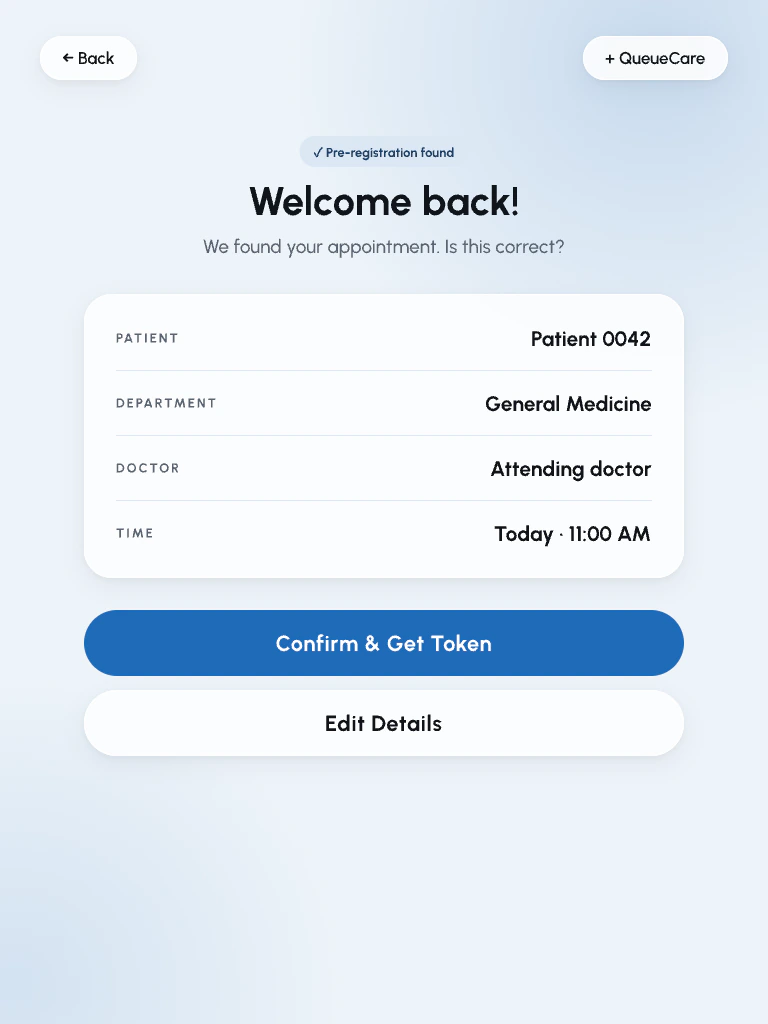
Kiosk check-in 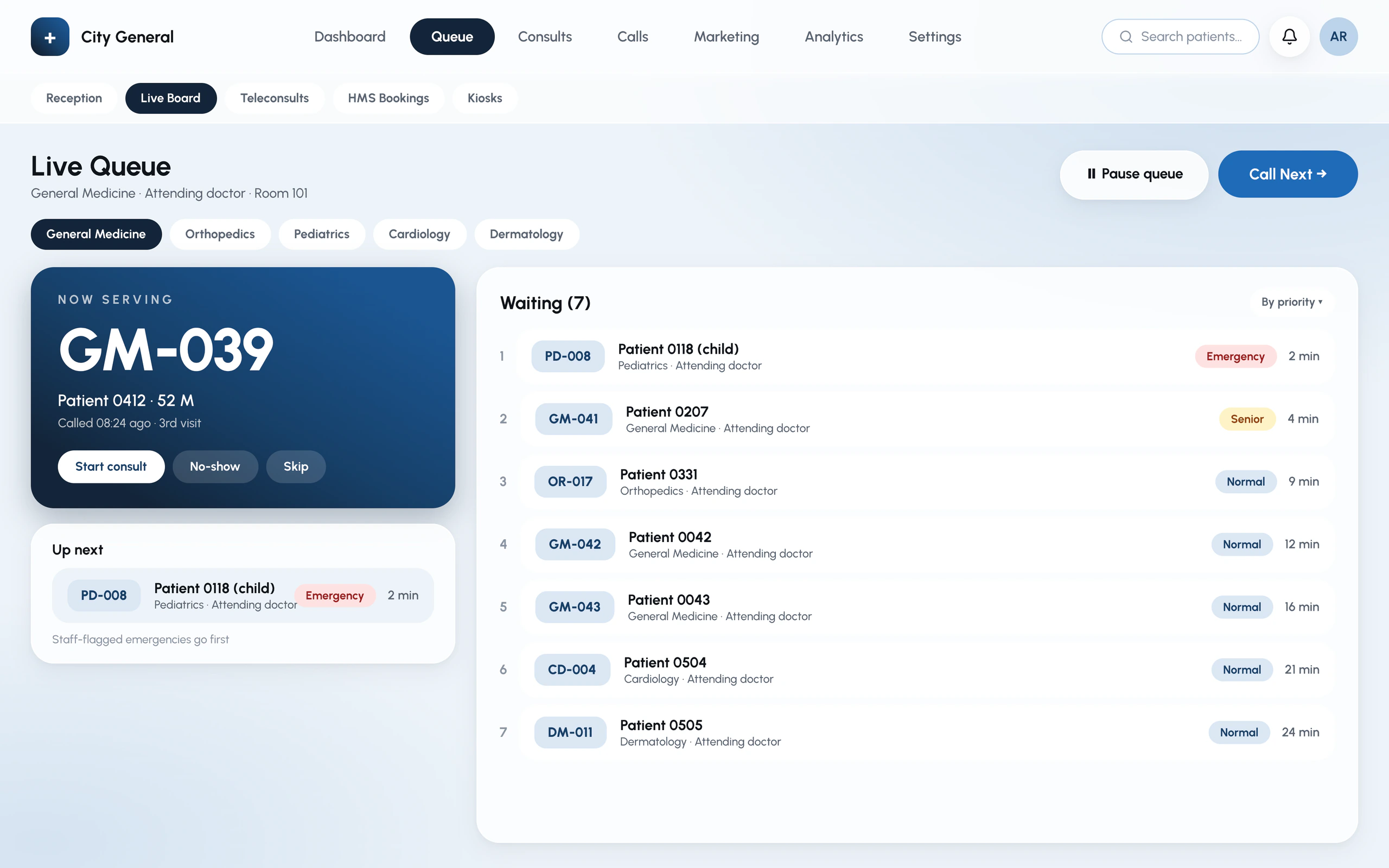
Live queue 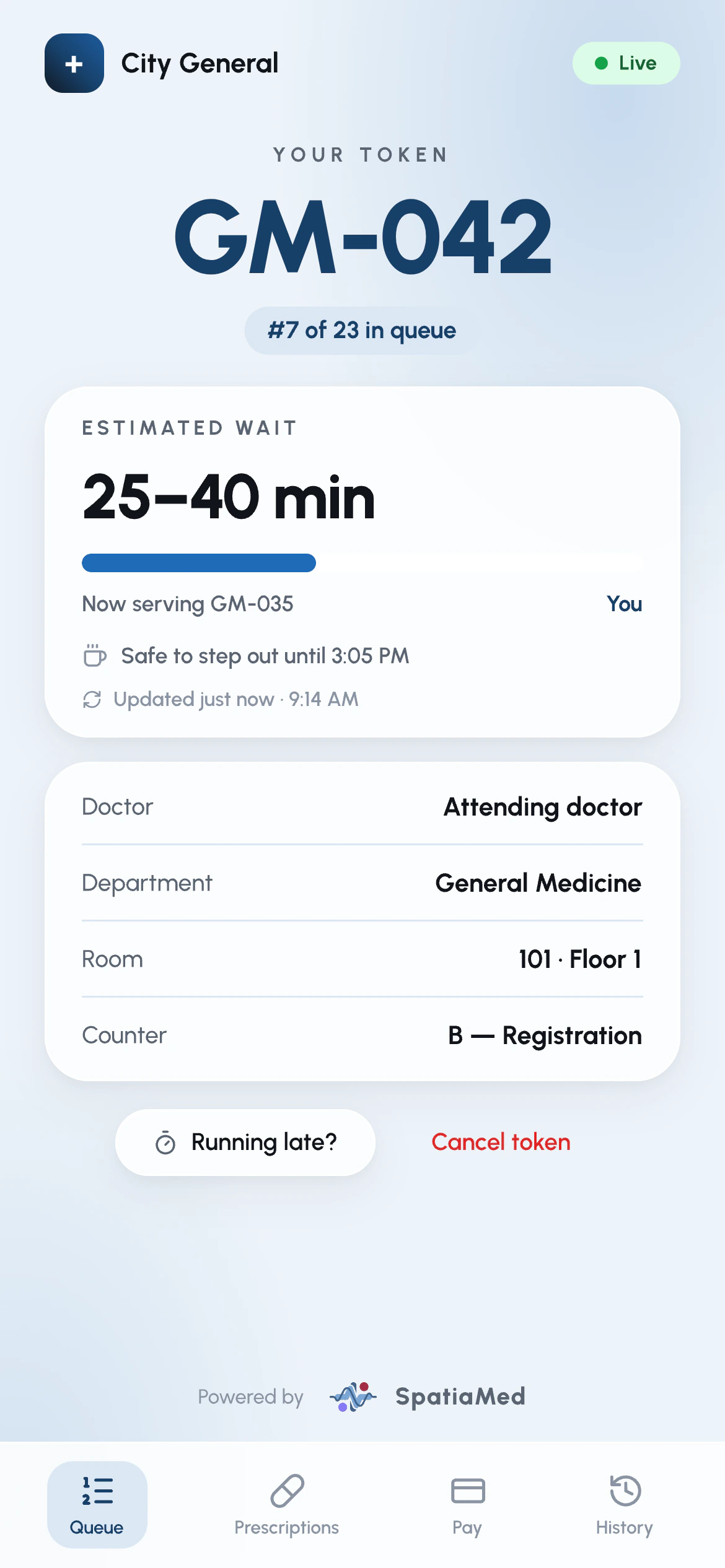
Patient tracker