hospital software
Now piloting with hospitals across India
Start a pilotqueue management · 2 min read · SpatiaMed Team
A practical guide to modernising your hospital's outpatient queue — from paper tokens to self-service kiosks and WhatsApp notifications.
Long OPD queues are one of the most visible pain points in Indian hospitals. Patients arrive early, wait for hours, and often leave frustrated before seeing a doctor. This guide walks through how hospitals are solving the problem with self-service kiosks, WhatsApp tokens, and AI-driven queue prediction.
Most hospitals issue paper tokens at a single reception counter. The bottleneck is obvious: one clerk, hundreds of patients, and no way to manage the load intelligently.
The problems compound:
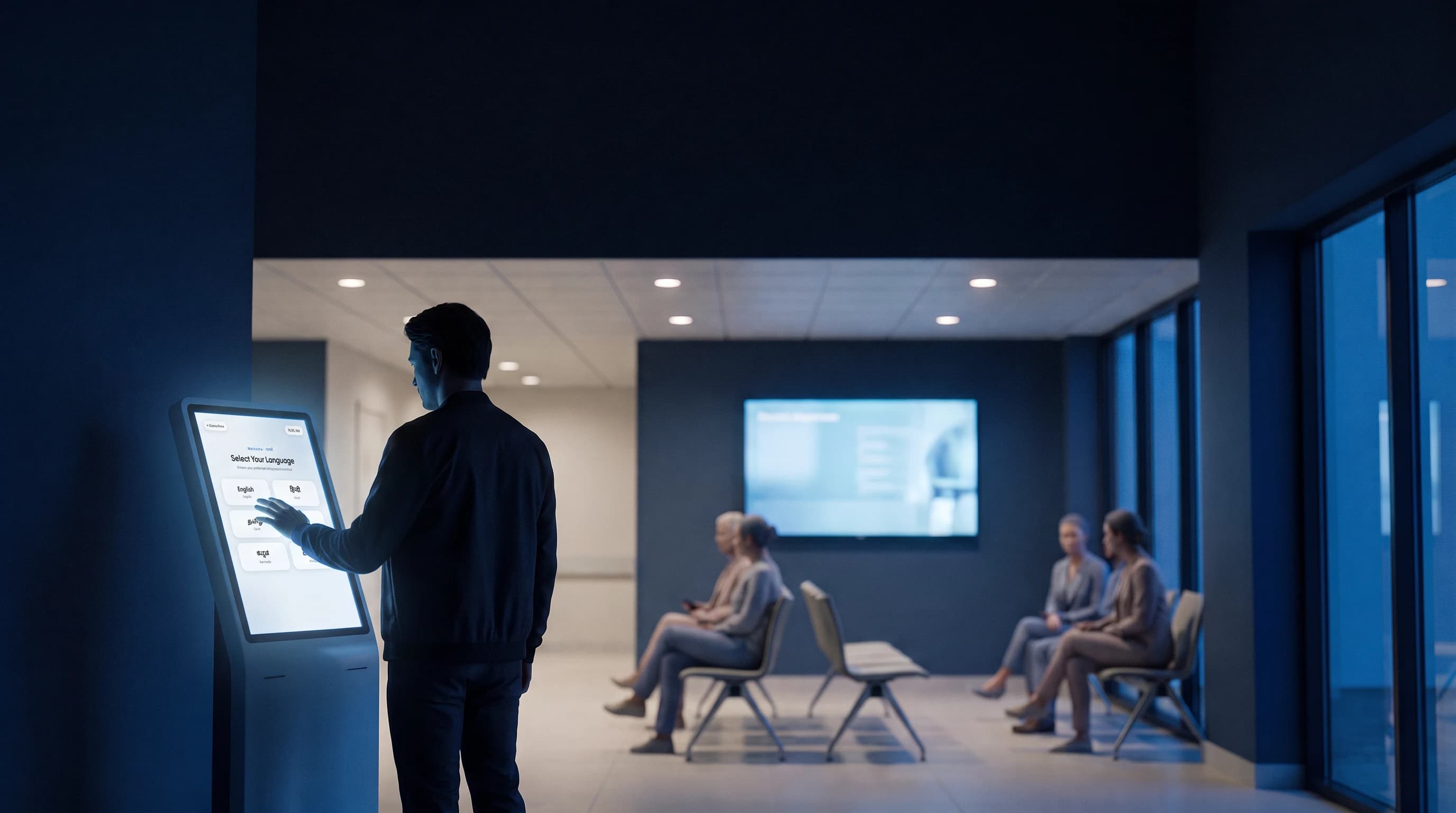
A self-service kiosk lets patients register and take their own token in under 30 seconds — in their preferred language. No queue at reception. No clerk required for token issuance.
The kiosk captures:
Once registered, the patient gets a WhatsApp message with their token number and an estimated wait time.
A display board visible from the waiting area shows the current token being served. Patients can track their position without asking staff. A QR code on the token slip can carry the same view to the patient's own phone — their live place in the queue and an estimated wait range — so they don't have to watch the screen.
Sending a WhatsApp message when a patient is 3 positions away reduces no-shows dramatically. Patients who stepped out for tea or to make a call come back at the right time — not five minutes before or after.
Hospitals using automated queue systems report:
The numbers vary by hospital size and specialty mix, but the direction is consistent: structured queues outperform informal ones in every metric.
The barrier to implementing a modern queue system is lower than most hospital administrators expect. A basic setup — kiosk tablet, display TV, and WhatsApp integration — can be live in two days.
The first step is mapping your current flow: how many patients arrive per hour, how many doctors are on duty, and where the current bottleneck sits. That mapping determines whether you need one kiosk or five, one display or one per corridor.
If you'd like a walkthrough of what a SpatiaMed QueueCare setup looks like in a hospital your size, book a 30-minute walkthrough — we'll show you the live system, not a slide deck.
Related: QueueCare — OPD queue management.