hospital software
Now piloting with hospitals across India
Start a pilotno-shows · 4 min read · SpatiaMed Team
No-shows cost Indian hospitals lakhs in lost revenue every month. Automated appointment reminders — sent at the right time, through the right channel — are the highest-ROI fix available.
A no-show is a slot that was booked, a doctor who prepared, and revenue that evaporated. In Indian hospitals, no-show rates for OPD appointments run between 15–30%, depending on speciality and patient demographics. For a hospital doing 80 OPD appointments per day at ₹500 average consultation fee, a 20% no-show rate is ₹8,000 per day — ₹24 lakh per year — in confirmed bookings that never converted.
The data across markets is consistent: automated reminders reduce no-show rates by 35–45%. The mechanism is simple — patients forget. A well-timed reminder, sent through a channel they actually use, is all they needed.
Before fixing no-shows, understand why they happen:
Forgetting (most common): Patients booked 2–3 weeks ago and lost track of the appointment. A reminder 24 hours before is sufficient to recover most of these.
Life happened: Transport broke down, a work crisis came up, a family emergency intervened. These can't be recovered, but they can be redirected — a "would you like to reschedule?" message converts some of these into future revenue.
Appointment anxiety: First-time patients, especially for specialities with stigma (psychiatry, oncology), sometimes back out at the last minute. A warm reminder that includes what to expect reduces this.
Cost concerns: Patients who've had a financial setback since booking may not show up. These are harder to address through messaging but easier if your hospital offers instalment options or a sliding fee scale.
Research on appointment reminders consistently finds a sweet spot:
Sending a single reminder — even just the 24-hour message — reduces no-shows by 20–30%. The 24-hour + 2-hour pair typically reaches 35–45% reduction.
Not all reminder channels are equal for Indian patient demographics.
| Channel | Open Rate | Act-on Rate | Notes |
|---|---|---|---|
| 90%+ | 60–70% | Highest engagement; requires DLT registration | |
| SMS | 85% | 35–45% | Universal fallback; requires DLT |
| Voice call | 70% | 50–55% | High friction to answer; good for elderly patients |
| 20% | 10–15% | Lowest for India; useful only for corporate patients |
WhatsApp is the dominant channel for most Indian patient demographics under 65. For elderly patients and rural areas, voice calls outperform text-based channels.
24-hour reminder (WhatsApp):
"Hi [Name], your appointment with Dr. [Doctor] at [Hospital] is tomorrow at [Time]. Reply CONFIRM to keep it, or RESCHEDULE if you need another time."
2-hour reminder (SMS — short):
"Reminder: Your appointment at [Hospital] is at [Time] today. Call [Phone] to reschedule. -[Hospital Name]"
No-show rescue (30 minutes after missed appointment):
"We missed you today, [Name]. We've held a slot for you this week. Tap here to rebook in 30 seconds: [Link]"
Note on the no-show rescue message: It works best when it's warm and non-accusatory. "We missed you" performs better than "You missed your appointment."
Before buying any reminder software, calculate your breakeven:
A hospital with 100 appointments per day, 20% no-show rate, ₹800 average consultation:
Most automated reminder systems cost ₹3,000–₹10,000/month. The payback period is typically under two weeks.
Sending too many messages: More than two reminders for a single appointment creates annoyance and opt-outs. Stick to the 24h + 2h pattern.
Calling after 9 PM: TRAI regulations prohibit commercial calls after 9 PM and before 9 AM. WhatsApp messages are less restricted but patient preference is to not receive hospital messages late at night.
Generic messages with no personalisation: "Dear Patient, your appointment is tomorrow" performs significantly worse than "Hi Priya, your appointment with the cardiologist is tomorrow at 10:30."
Not offering rescheduling: If a patient can't make it and there's no easy rescheduling option in the message, they simply don't show up. An embedded link to a booking page captures patients who would otherwise be lost.
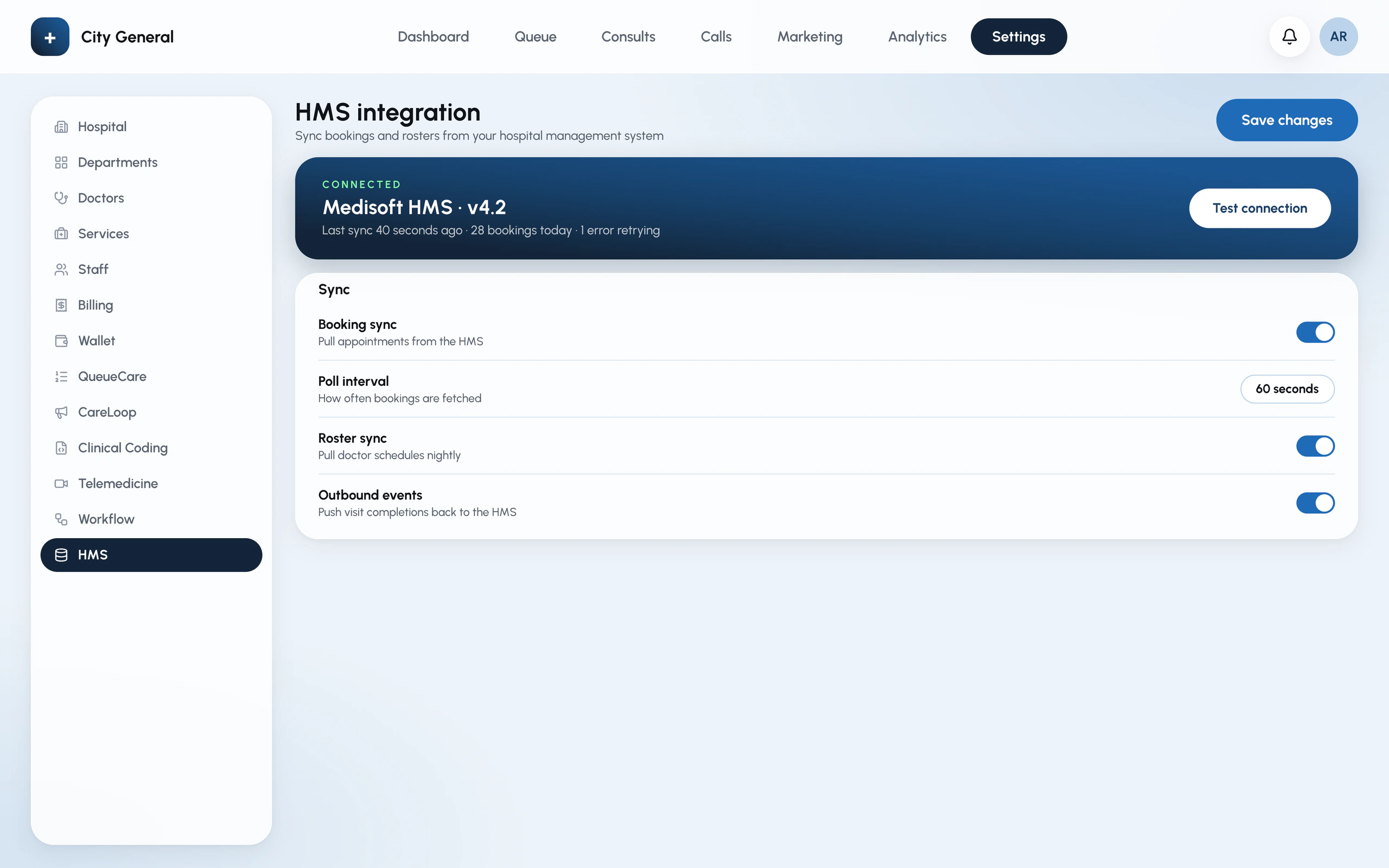
SpatiaMed CareLoop runs reminders on the same 24h + 2h pattern — WhatsApp and SMS reminders, a no-show follow-up and a rescheduling link — with templates written for NMC, TRAI and TCCCPR rules. Book a demo to see the no-show dashboard for your speciality mix.
Related: CareLoop — patient engagement between visits.